By New Heights Group
Whether you're in a classic bungalow in The Heights or a newer townhome in Cypress, making the most of your square footage is one of the most practical and rewarding things you can do as a homeowner. Small doesn't have to mean cramped. The right design choices create rooms that feel open, intentional, and genuinely comfortable. And beyond livability, smart space planning adds real value when it comes time to sell.
Key Takeaways
- Light color palettes and strategic mirror placement are two of the most effective tools for making small spaces feel larger
- Multifunctional furniture eliminates clutter and adds square footage you don't have to build
- Vertical space is consistently underused and often the easiest to improve
- Cohesive design choices across a home create a sense of flow that makes every room feel bigger
Use Light and Mirrors Strategically
Light is the single most powerful tool in interior design for small spaces. Rooms with more natural or artificial light feel larger and more open. Paint plays a huge role. Walls in soft whites, warm creams, and light greiges reflect light rather than absorbing it, making a room feel noticeably more spacious.
Mirrors amplify that effect considerably. A large mirror opposite a window reflects both natural light and the sense of depth beyond it, making a room appear to extend further than it does. Mirrored furniture and glass-topped tables add reflective surfaces without the visual weight of traditional pieces.
What To Do With Light and Mirrors
- Paint walls in light, warm neutrals that reflect rather than absorb light
- Place a large mirror opposite the main light source to bounce light around the room
- Use glass or acrylic furniture legs and tabletops to reduce visual weight without sacrificing function
- Layer artificial lighting from multiple sources at different heights rather than relying on one overhead fixture
Choose Furniture That Works Harder
In a smaller home, every piece of furniture should justify its footprint. A sofa bed does the job of two pieces. A storage ottoman provides seating, a surface, and concealed storage. A dining table with a leaf insert accommodates daily use and guests without consuming space when not needed.
Scale matters as much as function. Oversized furniture crowds a small room and makes it feel smaller than it is. Choosing pieces proportional to the room, with clear pathways between them, keeps the space feeling open. In The Heights townhomes, where living areas can be compact, getting this right from the start makes a meaningful difference.
Furniture Choices That Maximize Space
- Sofas with legs rather than floor-hugging bases, which create visual breathing room underneath
- Storage ottomans, coffee tables with drawers, and beds with built-in storage that eliminate extra pieces
- Dining tables with drop leaves or extendable sections that scale to actual need
- Furniture in lighter finishes and natural wood tones that blend rather than compete with the walls
Go Vertical
Floor space is finite, but wall space is often underused. Going vertical is one of the most effective ways to add storage and visual interest to a small room. Shelves mounted high draw the eye upward, making ceilings feel taller and freeing floor space for movement. Floor-to-ceiling cabinetry and stacked shelving apply the same principle.
In both Heights bungalows and Cypress homes, vertical storage in entries, kitchens, and utility spaces eliminates the visual clutter that makes small spaces feel chaotic. The cleaner the floor reads, the larger the room feels.
How To Use Vertical Space
- Mount shelves higher than usual to draw the eye up and make ceilings feel taller
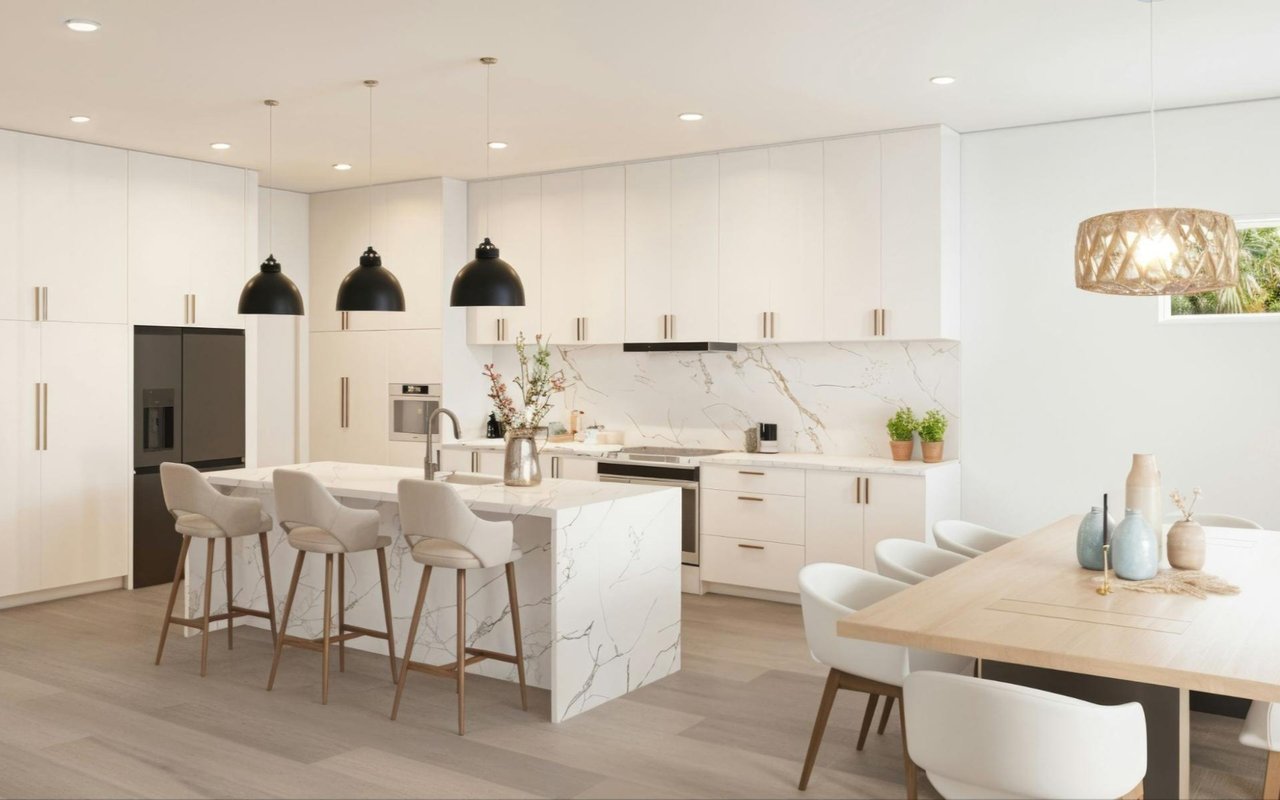
- Use floor-to-ceiling cabinetry in kitchens and utility spaces to maximize storage without expanding footprint
- Hang curtains as high as possible and extend the rod beyond the window frame to make windows look larger
- Choose tall, narrow furniture over wide, low pieces where ceiling height allows
Create Zones Without Walls
Open floor plans, common in newer Cypress townhomes, can feel undefined rather than expansive when everything runs together. The solution is zoning through furniture, rugs, and lighting rather than walls.
A rug under the living room furniture clearly defines that area while leaving the adjacent dining zone distinct. Pendant lighting over the dining table marks the eating area without a room divider. These distinctions make a home feel organized and intentional, which reads as larger even when square footage hasn't changed.
Ways To Zone Without Adding Walls
- Define the seating area with a rug sized to sit at least partially under all main furniture
- Use pendant lighting over dining areas and table lamps in seating areas to create distinct atmospheres
- Position furniture to face inward within each zone rather than pushing everything against the walls
- Maintain a consistent color palette across zones to keep the eye moving rather than stopping
Edit Relentlessly
The greatest enemy of a small space is too much stuff. Every item in a room competes for visual attention, and the more competition there is, the more cramped the space feels. Editing ruthlessly what stays and what goes is not just a tidying habit but a design principle.
In homes going on the market, this is something we address with every seller. Buyers respond to space and light before anything else. A room with fewer, better-chosen pieces photographs better, shows better, and creates stronger first impressions. The same principle applies whether you're living in the space or preparing to leave it.
What To Edit Before You Decorate
- Remove any furniture that doesn't serve a daily function or create genuine comfort
- Clear surfaces of items that don't earn their place by being beautiful or functional
- Store rather than display anything seasonal or rarely used
- Limit art to one or two intentional pieces per room rather than covering every wall
FAQs
What is the most effective interior design tip for small spaces?
Start with light paint colors and mirrors. These two changes cost relatively little and have the largest visual impact before you touch anything else. After that, editing what is already in the room matters more than adding anything new.
Does furniture size really matter in a small room?
Considerably. Oversized furniture in a small room overwhelms the space and makes movement difficult. Pieces scaled to the room, with clear pathways between them, make the same square footage feel noticeably more open and livable.
Do these principles apply when preparing a home to sell?
They are among the most effective things a seller can do before listing. Buyers make snap decisions, and a home that feels spacious, light, and organized creates a stronger first impression.
Contact New Heights Group Today
Good design doesn't require more space — it requires better decisions. Whether you're refreshing your current home or preparing to list it, we bring the same practical eye to every property we represent.
Reach out through
New Heights Group and let us help you make the most of your home.