Selling a historic home in Montrose can feel like a balancing act. You want to attract strong buyers and showcase updates, but you also do not want to erase the details that make your home special in the first place. The good news is that with the right strategy, you can highlight character, stay mindful of local rules, and tell a story buyers will remember. Let’s dive in.
Montrose sits within Houston’s Neartown and Montrose area, which the City of Houston describes as one of the city’s oldest and most historic neighborhoods. It is also home to six Houston-designated historic districts and is known for its eclectic identity and long architectural history.
That context matters when you sell. In a place like Montrose, buyers are often looking for more than square footage or a recent renovation. They may respond to preserved architectural details, visible craftsmanship, and the sense that a home still reflects its era.
City district descriptions help paint that picture. In Montrose-area historic districts, you will find styles like Craftsman, Prairie, Colonial Revival, Tudor Revival, American Four Square, Art Deco, and Neoclassical. Features such as stucco exteriors, multi-pane windows, porches, wide eaves, and original trim can all help your home stand out.
Before you make updates or go live, verify exactly how your property is classified. This step can shape your prep plan, your disclosures, and the way you market the home.
Houston does not use zoning in the traditional way. Instead, the city regulates development through ordinance codes, and deed restrictions can also affect what is allowed. In inner-loop areas like Montrose, that means block-by-block rules and recorded restrictions can matter just as much as a home’s age.
A home can have historic significance without being subject to the same local review rules. That is why it is important not to treat every form of historic recognition the same way.
For example, National Register listing provides recognition, but it does not impose restrictions on property owners. Local Houston historic-district, landmark, or protected landmark status is different because exterior changes may require city review.
For designated landmarks, protected landmarks, and homes inside a historic district, exterior alterations generally require a Certificate of Appropriateness, often called a COA. Houston states that work done without approval can lead to fines, restoration requirements, removal of work, or a stop-work order.
There are some exemptions. The city notes that certain ordinary maintenance and like-kind exterior repairs may not require a COA, including in-kind re-roofing and some storm windows, doors, and screens. Still, it is smart to verify first rather than assume.
If you are unsure about what is original, what is allowed, or which review path applies, Houston recommends involving historic-preservation staff early. That early check can help reduce delays, avoid unnecessary costs, and make your listing timeline easier to manage.
The city also points owners to documentation sources that can help verify historic features. These include Sanborn maps, tax-assessor photos, historical photographs, original drawings, newspaper articles, and physical remnants on the home itself.
One of the biggest mistakes sellers make with older homes is over-modernizing before listing. In Montrose, that can work against you if it removes the very details buyers hoped to find.
Houston’s preservation guidance focuses on keeping significant exterior features intact. That includes siding, windows, doors, porch features, and other visible elements that define the home’s character.
If a character-defining feature can be repaired, that is often the safer move. Original windows, doors, trim, masonry, porches, and rooflines usually add more value to the home’s story than brand-new replacements chosen only to look more contemporary.
When replacement is unavoidable, Houston favors materials that match the original in size, shape, material, and pattern. The goal is compatibility, not contrast. Buyers who are drawn to Montrose charm will often notice the difference.
Interior updates are generally less constrained than exterior work. Houston’s historic site tax exemption page notes that internal improvements do not require a COA, which supports a smart pre-listing strategy: refresh the inside while protecting the outside.
That can mean:
This approach helps your home photograph well without changing the features that make it distinctive.
Historic homes often sell best when buyers can quickly see what makes them special. Good staging does not distract from period details. It helps frame them.
In Montrose, some of the most useful visual details are the same features highlighted in city district descriptions. Think multi-pane windows, stucco exteriors, porch details, wide eaves, and mature streetscapes.
Your exterior photos should capture more than the front door. If your property includes original details or sits on a block with preserved historic features, those visuals can strengthen the listing story.
Useful exterior focal points may include:
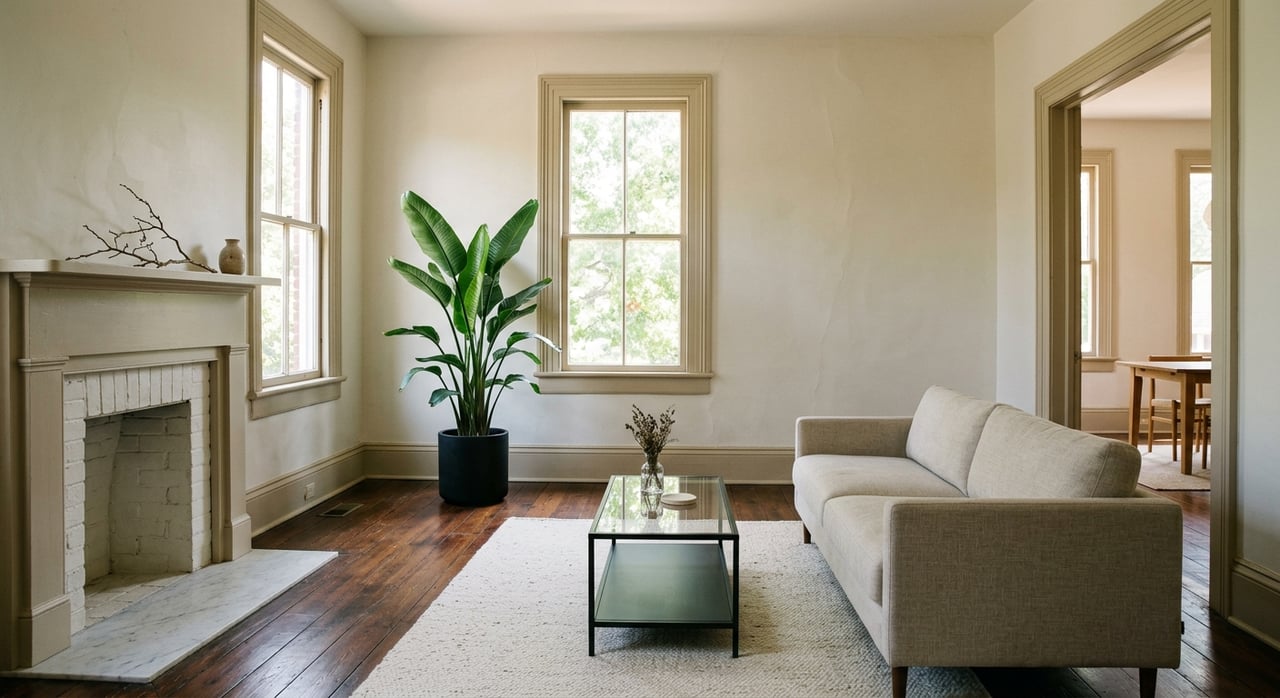
Inside the home, let the architecture lead. Clean lines, lighter styling, and thoughtful furniture placement can help original millwork, tall windows, fireplaces, or room proportions stand out.
The goal is not to make the home feel generic. It is to help buyers imagine living there while still appreciating that the home has a different story than a standard resale.
Historic-home marketing works best when it is specific. Instead of calling the home simply “updated” or “full of charm,” describe what is actually there, what has been preserved, and what has been improved.
That level of detail can build trust and make your listing feel more credible. It also helps buyers understand why the home is different from a newer property nearby.
If you can accurately identify the architectural style, use it. City district pages for Montrose-area historic districts reference styles such as Craftsman, Prairie, Colonial Revival, Tudor Revival, Art Deco, and Neoclassical.
That kind of language gives buyers a clearer picture and can make the home more memorable. It also signals that the listing has been prepared with care rather than with generic marketing copy.
One of the strongest ways to market a historic home is to break out the story clearly:
This structure respects the home’s history while still showing practical improvements. It also aligns with Houston’s preservation approach, which emphasizes protecting significant historic materials and keeping the original structure predominant.
Historic context can add depth, but it should be accurate. For example, First Montrose Commons was designated in 2010 as a reminder of Houston’s development from 1900 to 1941. Courtlandt Place was established in 1906 and remains one of the few old subdivisions still intact. Avondale is a Montrose-area subdivision located a few miles west of downtown.
Details like these can help position a home within Montrose’s broader history. They work best when they are factual, concise, and tied directly to the property.
A well-documented historic home often feels easier for buyers to evaluate. If you have records that support the condition, legality, or history of work completed, gather them before your listing goes live.
Helpful materials may include:
These documents can reassure buyers about what was done, what remains original, and whether exterior work followed the right process.
Older homes often come with extra disclosure steps, and it is best to prepare early. Buyers are usually more comfortable when information is organized and clearly presented.
In Texas, the current Seller’s Disclosure Notice applies to sellers of previously occupied single-family residences and covers known material facts and physical condition. If your home was built before 1978, federal lead-based paint disclosure rules also generally apply, including known records and reports, a lead pamphlet, and a 10-day buyer inspection opportunity.
This does not have to be a red flag. It is simply part of selling an older home responsibly and transparently.
Some buyers hear the word “historic” and worry that a sale will be harder, updates will be impossible, or ownership will be too restrictive. Clear marketing and good preparation can help answer those concerns before they become obstacles.
A historic designation does not automatically block a sale or future improvements. National Register status alone does not restrict owners, and Houston’s system allows certain exemptions and review paths. The main issue is usually exterior changes to locally designated properties, not ordinary ownership.
If your property is city-designated and qualifies, there may also be a useful upside to mention. Houston states that some designated historic properties may be eligible for the city’s historic site tax exemption, though eligibility depends on meeting the city’s requirements.
Selling a historic home in Montrose is not about making it look like every other listing. It is about presenting the home in a way that respects its architecture, fits local preservation rules, and gives buyers confidence in both the beauty and the facts.
That takes thoughtful prep, accurate storytelling, and a clear plan for what to update, what to preserve, and how to market the result. When you strike that balance, your home’s charm becomes one of its biggest advantages.
If you are preparing to sell a historic home in Montrose, working with a team that understands inner-loop neighborhoods, presentation strategy, and the details that shape buyer confidence can make a meaningful difference. Heather Fordham can help you position your home with care, clarity, and a plan built around what makes it special.
New Heights Group delivers outstanding service, personal attention, and results to grateful clients. Contact them today!
Contact UsAddress
4200 Westheimer Rd., #1000
Houston, TX 77027
New Heights Group